Alignment at the core.
The need for a new digital standard.
After undergoing a major global rebranding, Iberdrola’s digital ecosystem remained highly fragmented. Each product had evolved independently over time, forcing the company to deal with multiple issues that limited collaboration and made it difficult to scale efficiently from a business standpoint:
-
Disjointed visual styles
-
Inconsistent user experiences
-
Lack of standardization across its platforms
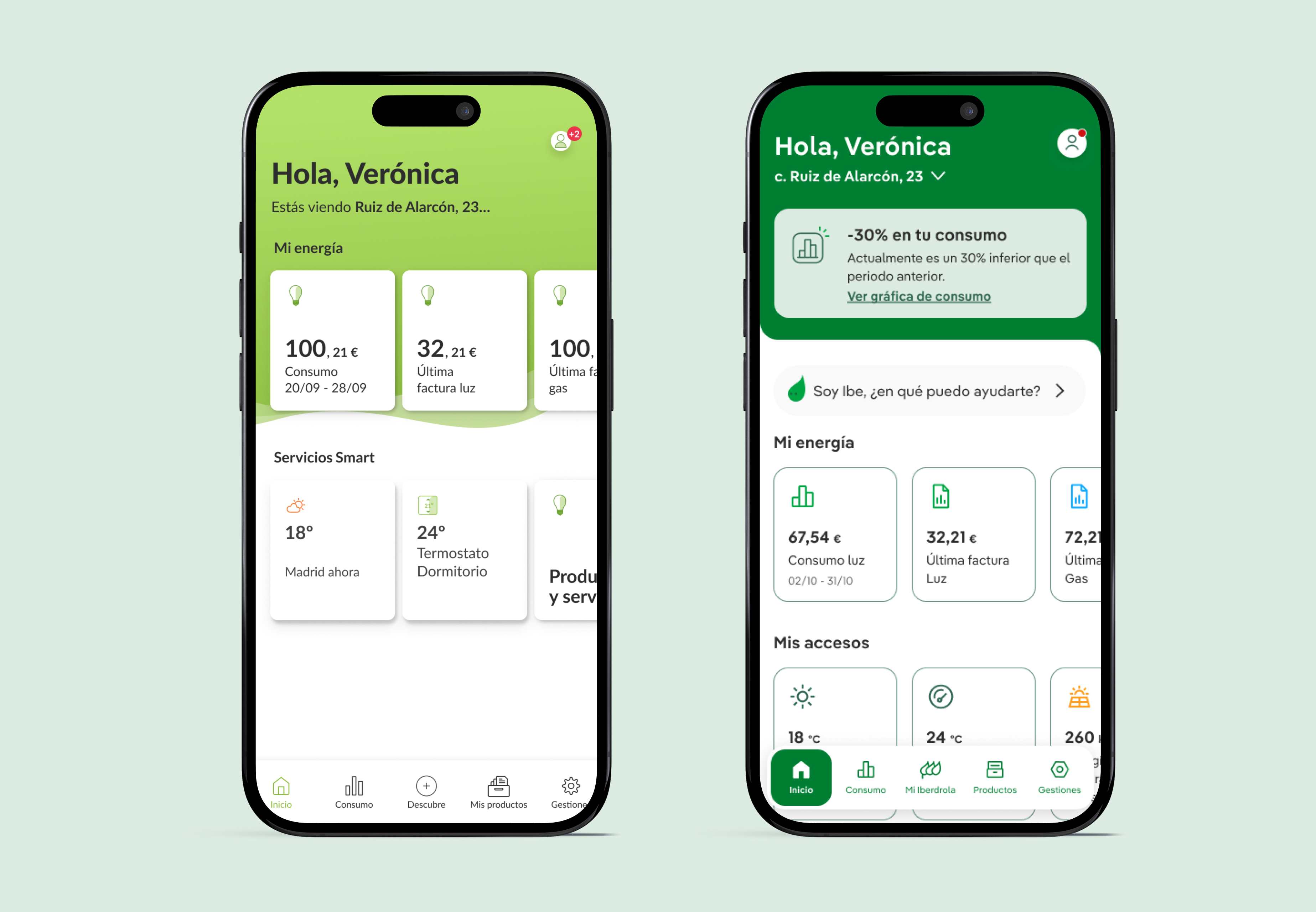
Fragmented libraries and inconsistent processes
Without a clearly defined digital
governance,
design teams were forced to work with "detached components", leading to duplicated efforts, mounting
design debt, and significant accessibility gaps.
Navigating a wide variety of technical profiles
and external agencies only added complexity, making centralized governance an absolute necessity.
"We've become too inefficient"
This was a scenario ruled by a lack of efficiency, which created a significant, negative impact on business: large timeframes to complete a task, inaccuracies between designs, unoptimized development assets, and most importantly, poor governance.
Build a system that finally speaks one language.
Recognizing the urgent need for coherence, a specialized team was assembled to build a robust Design System from the ground up. The primary goal was to improve efficiency, ensure accessibility, foster team collaboration, and seamlessly translate the new brand identity into the digital realm. The plan was:
-
Create a dedicated DS team and establish a governance model
-
Rebuild the digital libraries from scratch.
-
Document, coordinate and scale the new Design System.
Thinking about people, not components.
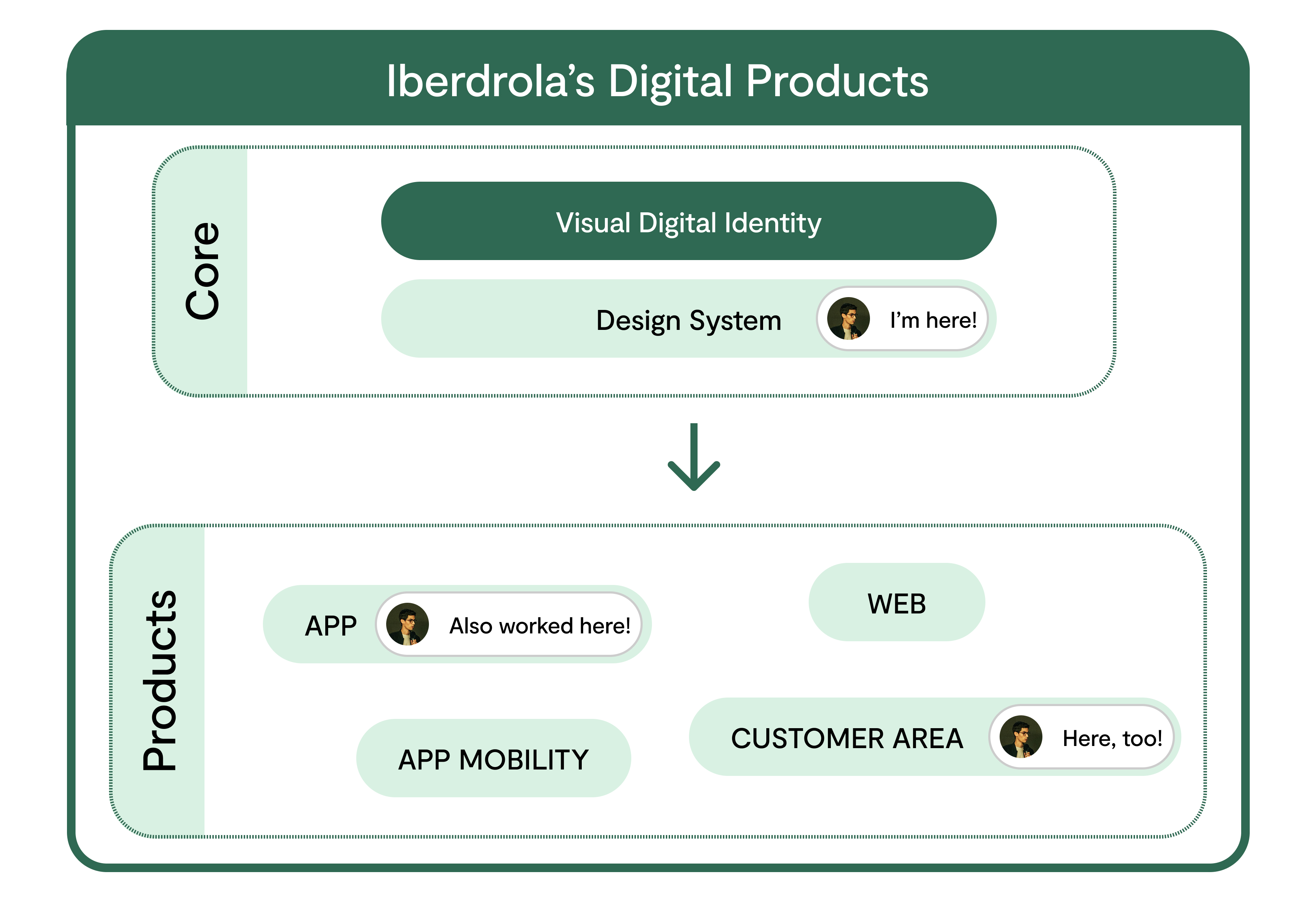
As a UX Designer on the core Design System team, I was directly responsible for executing the governance model, designing and maintaining asset libraries, aligning with devs for technical constraints, and creating the documentation necessary to support this multiplatform solution.
Governance model
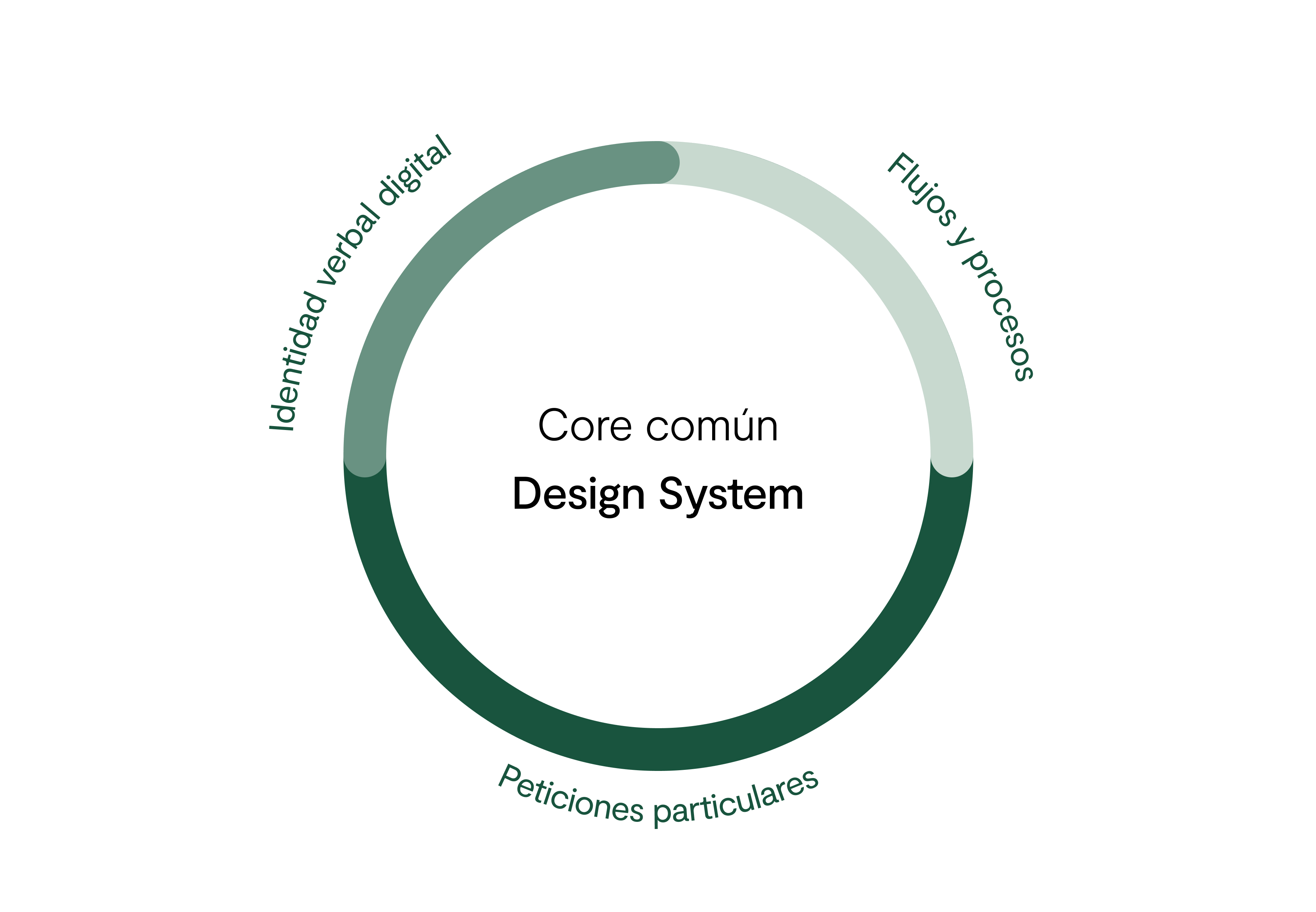
While the first thing that comes to mind when talking about Design Systems are interconnected libraries of foundations and components, the reality is that they are mostly about people. We began by implementing a hybrid governance model, acting as a dedicated central brain to ensure effective communication, continuous feedback, and widespread adoption across all product groups.
Structured libraries
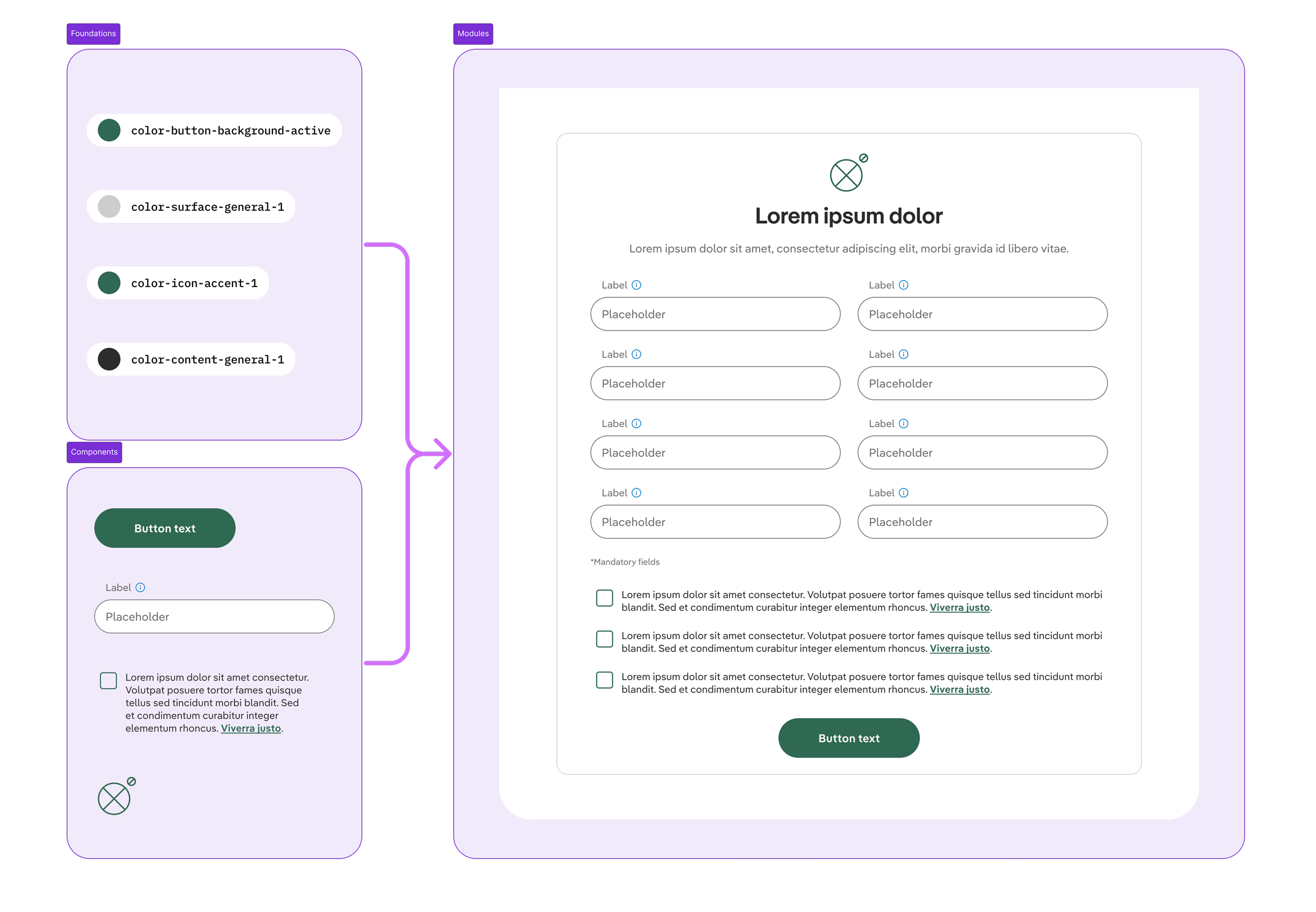
For the technical side, it was built as an ecosystem of coordinated libraries, carefully monitored and updated. This included:
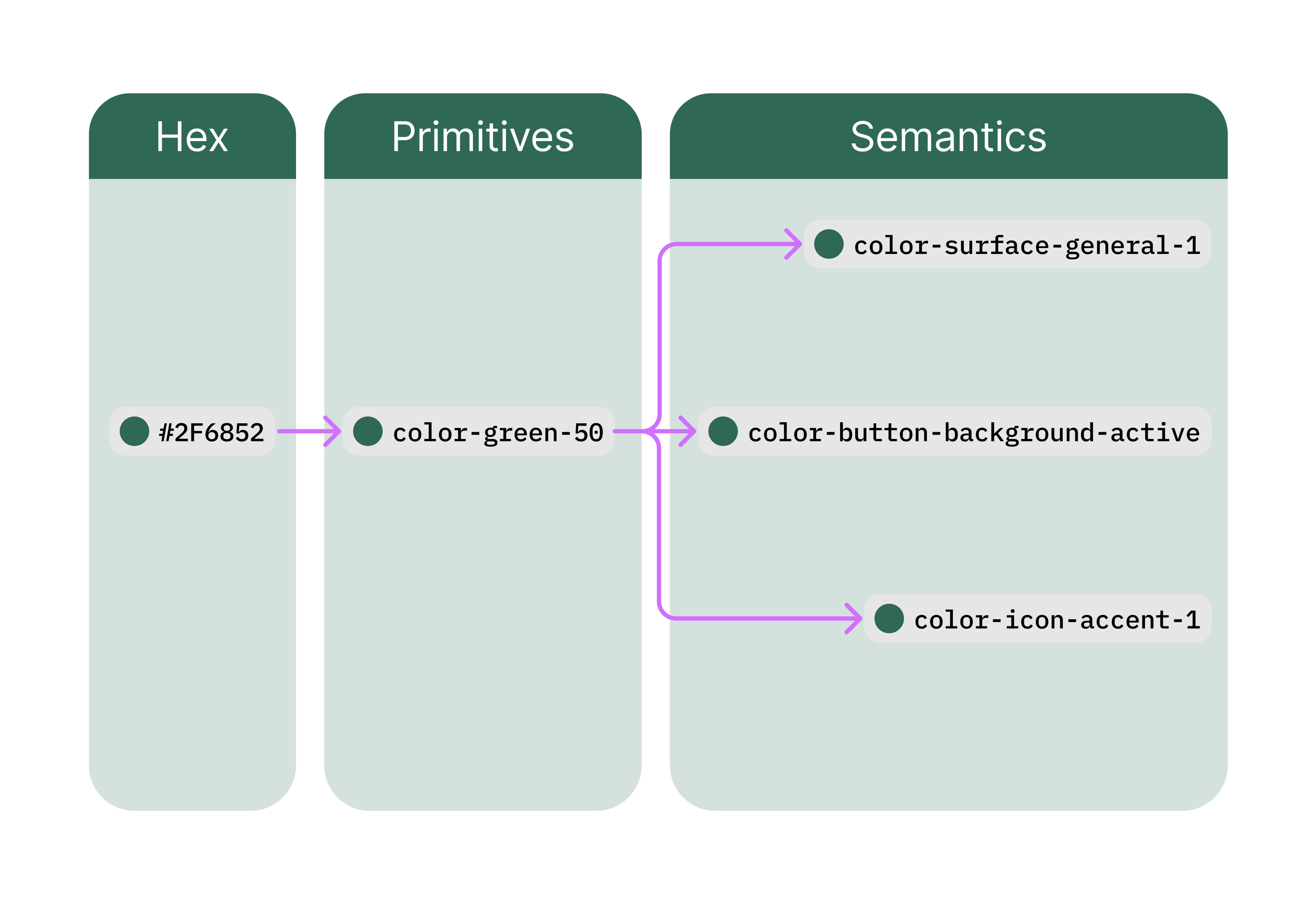
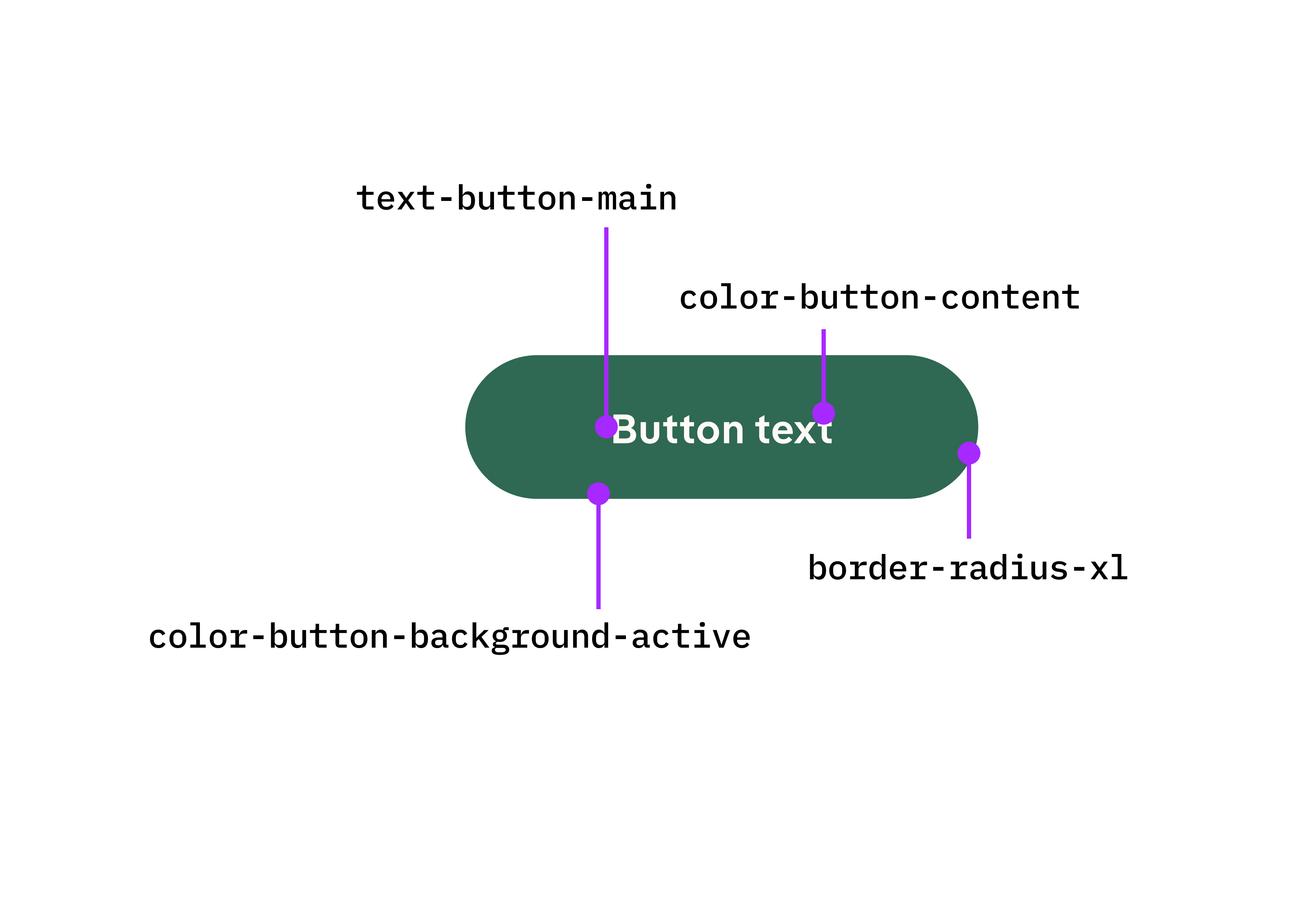
- Core Foundations library (housing design tokens, typography and icons)
- Platform-specific Components libraries tailored for iOS, Android, Web, and the Customer Area.
- Other semantic libraries for specific assets like Icons and Charts.
Usable documentation
A design system without proper documentation falls apart quickly. Thus, this phase, in collaboration
with
the dedicated developer teams and key stakeholders, was focused on establishing the necessary
documentation
standards to support this multiplatform solution.
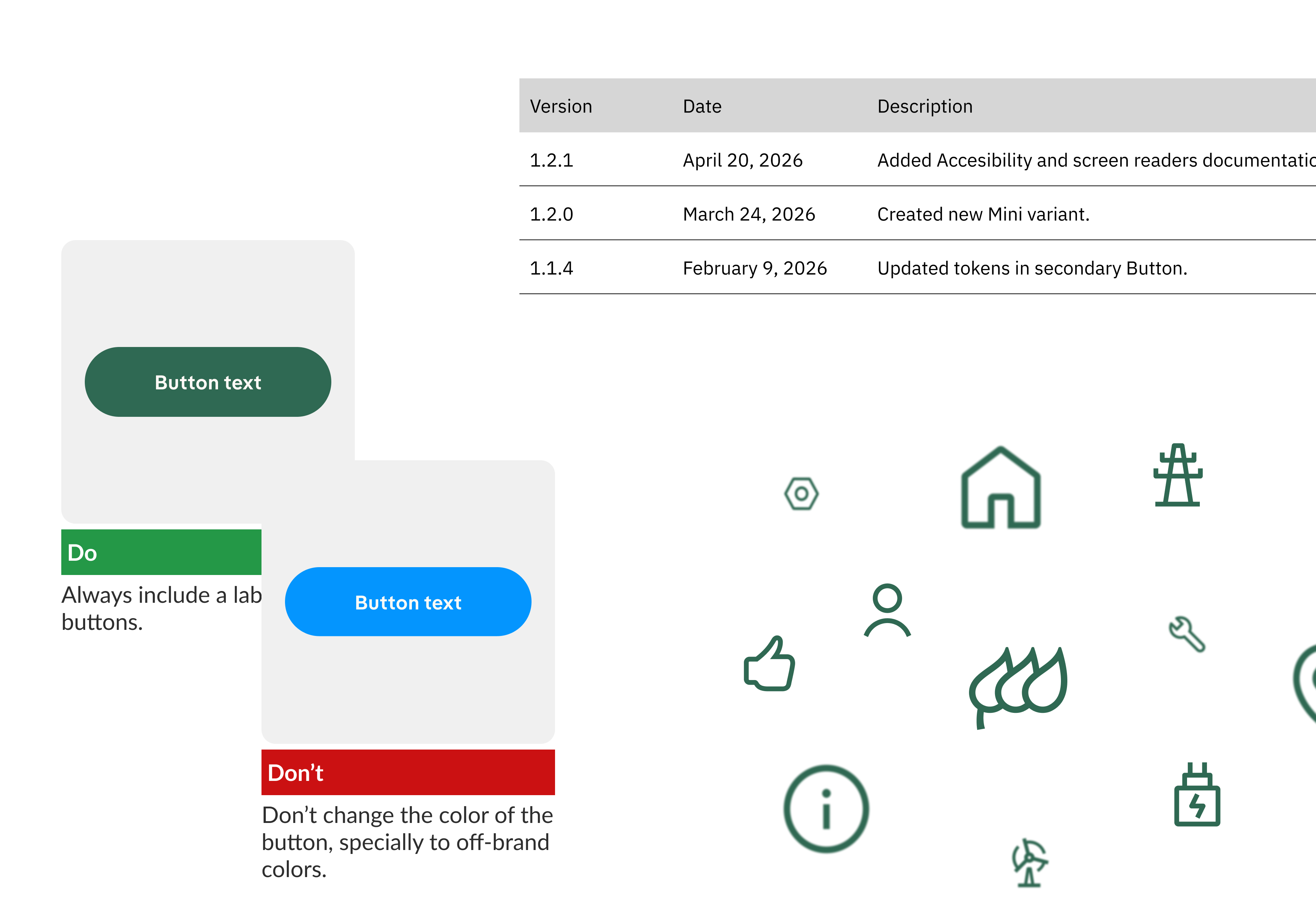
Documentation included usage rules, behavior,
styles, code fragments and changelogs to keep track of updates
Less friction, more efficiency
The rollout of the centralized Design System profoundly transformed day-to-day operations. By moving away
from just dispersed UI kits to a centralized, properly governed Design System, we achieved a significant
reduction in execution times and costs for both design and development.
Teams were
empowered
to
deliver more, faster, and with higher quality, thanks to shared standards and
cross-agency alignment.
The team felt the shift.
After some months with the Design System, internal retrospective workshops proved that the team felt incredibly comfortable with the new libraries, documentation and processes, and overall with improved morale.
Design is governance too.
Design Systems are strategic business assets for solving complex operational problems within digital teams, driving both operational efficiency and bottom-line revenue. They are a must for every business looking to scale their digital solutions fast, without losing consistency in design.

A new way to reward your loyalty
Learn how I helped design Iberdrola's loyalty program from scratch, improving customer retention, satisfaction and enhancing the brand experience.
 VIEW PROJECT